The Story of Maa Amba: The Divine Spirit Behind Garba
30 July 2026
The Story of Maa Amba: The Divine Spirit Behind Garba
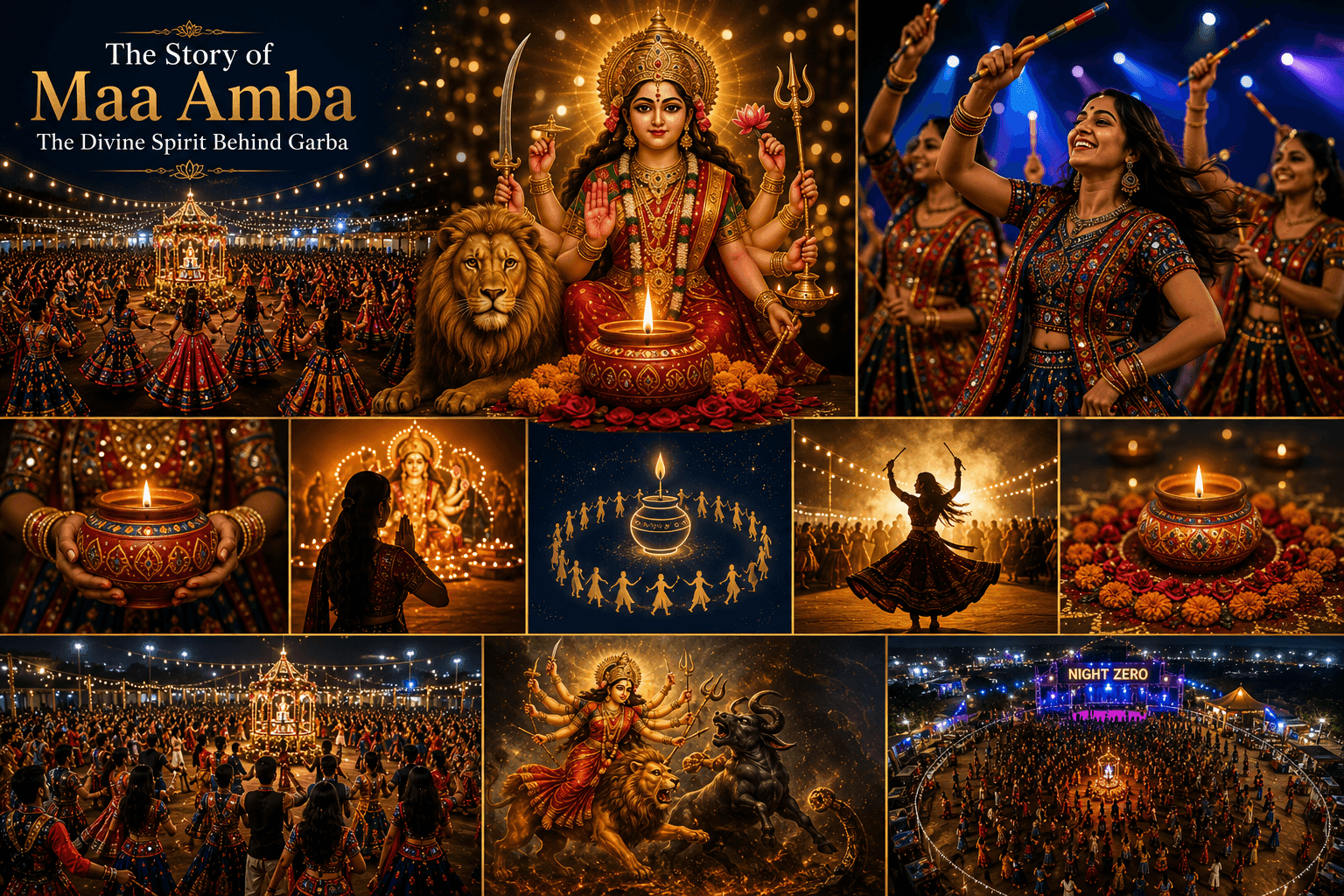
Every beat of the dhol, every clap in rhythm, and every step taken during Garba carries a deeper meaning. At the heart of this centuries-old tradition is Maa Amba, the Divine Mother and the embodiment of Shakti—the universal force of strength, protection, wisdom, and compassion.
Understanding her story helps us understand why Garba is much more than a festive dance. It is a celebration rooted in devotion, culture, faith, and the timeless spirit of Gujarat.
Who Is Maa Amba?
Maa Amba, also known as Amba Maa, Jagdamba, or Durga, is revered as the Mother of the Universe in Hindu tradition. She symbolizes the divine power that sustains life and protects righteousness.
Her many forms represent different virtues that continue to inspire devotees:
- Strength to overcome challenges.
- Wisdom to make the right choices.
- Compassion to care for others.
- Courage to stand against injustice.
For millions of devotees, Maa Amba is not only a goddess but also a source of hope, faith, and inner strength.
Why Is Navratri Dedicated to Maa Amba?
The word Navratri means "Nine Nights." These nine nights are devoted to worshipping the divine forms of Goddess Durga.
According to tradition, the Goddess fought the powerful demon Mahishasura for nine days and nights. On the tenth day, celebrated as Vijayadashami (Dussehra), she emerged victorious.
This victory symbolizes the triumph of good over evil, truth over falsehood, and light over darkness.
Navratri is therefore not just a festival—it is a reminder that perseverance, faith, and righteousness can overcome even the greatest challenges.
Why Do We Dance Garba?
The word Garba is believed to originate from the Sanskrit word Garbha, meaning "womb," which represents creation and life.
Traditionally, devotees place a beautifully decorated earthen pot, known as a Garbo, with a lamp burning inside at the center of the circle. The lamp represents the eternal divine energy of Maa Amba.
As dancers move around the lamp, they acknowledge that while life constantly changes, the Divine remains at the center of existence.
Every circle, every clap, and every step becomes an expression of devotion.
Maa Amba's Teachings in Everyday Life
The story of Maa Amba is timeless because the values she represents remain relevant even today.
Her teachings inspire us to:
- Face challenges with courage.
- Stand for truth and justice.
- Respect women as embodiments of strength and creation.
- Protect culture while embracing progress.
- Live with humility, faith, and gratitude.
These principles make Navratri more than a celebration. They make it a journey of faith, reflection, and personal growth.
Maa Amba and Night Zero
At Night Zero, we believe every Garba celebration should begin with reverence for the tradition that gave it life.
Beyond the lights, music, and performances lies a deeper purpose—to celebrate culture, preserve heritage, and honour the divine spirit of Maa Amba.
When thousands gather in one circle, dressed in vibrant colours and dancing with joy, they become part of a tradition that has united generations through faith, devotion, and community.
Garba is not simply about music or dance. It is about remembering where the tradition comes from and celebrating the values that continue to give it meaning.
Because Garba Begins With Maa Amba
Every beat of the dhol carries tradition. Every circle carries togetherness. Every step carries devotion.
And behind it all stands the divine spirit of Maa Amba.
Because Garba begins not with music—it begins with Maa Amba.